
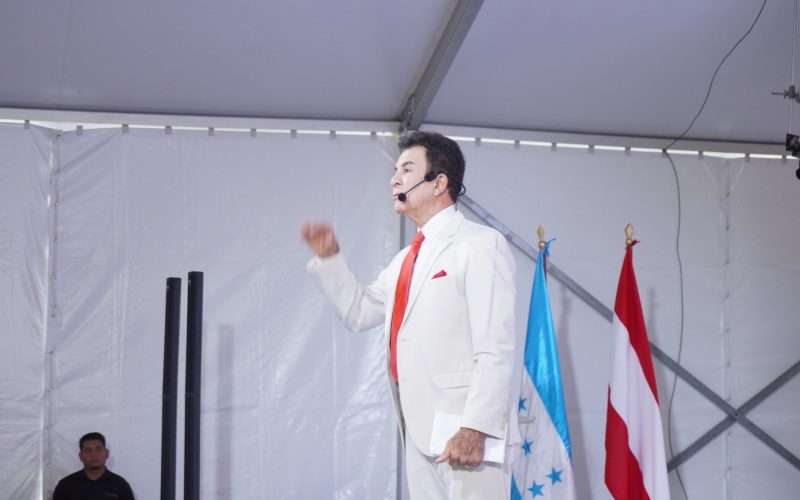
The Honduran electoral landscape remains highly competitive ahead of the November 30 election. Polls continue to position Salvador Nasralla and Nasry “Tito” Asfura as the main contenders, while the ruling party’s candidate, Rixi Moncada, lags behind in third place with no signs of a significant rebound.
Recent polls show that both Nasralla and Asfura are capturing the interest of undecided voters, considered a decisive segment in determining the final outcome. Both candidates have intensified their presence on the ground, reinforcing messages focused on economic stability, the fight against corruption, and governance, factors that the electorate seems to value in the final stretch of the campaign.
In contrast, Moncada’s performance reveals a continuous downturn. Experts link this scenario to the weakening of the governing LIBRE party, objections to its policy agenda, and increasing public discontent with the administration’s actions. “Moncada is approaching the campaign’s conclusion in a vulnerable state. Her maximum electoral support is clear, and there appears to be no opportunity for substantial improvement,” stated an independent political commentator. Recent surveys position her over fifteen points behind the leading two candidates, a deficit deemed challenging to bridge at this point in the election cycle.
Voter preferences and economic orientation
Business, academic, and social spheres have noted that the electorate demonstrates a distinct preference for choices seen as centrist and investment-friendly, a pattern that has benefited both Nasralla and Asfura. The decision between these two contenders underscores a discussion about the economic and administrative objectives they will confront in the upcoming period. This division also emphasizes the significance of public involvement as a crucial element in the credibility of the election proceedings.
Global Oversight and Division
International observers emphasize that Honduras is experiencing one of the most polarized contests in its recent history, where voter mobilization will be essential to ensure transparency and acceptance of the results. The pressure for an informed vote is combined with the interest of external sectors in the country’s political and economic stability, elements that could influence the perception of election day.
The present situation illustrates a landscape where the primary competition unfolds between Nasralla and Asfura, whereas Moncada confronts a challenging prospect regarding electoral standing. The concluding phase of the campaign is emerging as a pivotal moment for solidifying backing, establishing regional approaches, and guaranteeing the involvement of crucial constituents.
The contest highlights the tension between governance, expectations of stability, and the need for robust citizen participation. The decision of undecided voters and the response of the parties to economic and social challenges will set the course for the country in the next term, in a process where institutional legitimacy and confidence in the elections remain central issues.


