
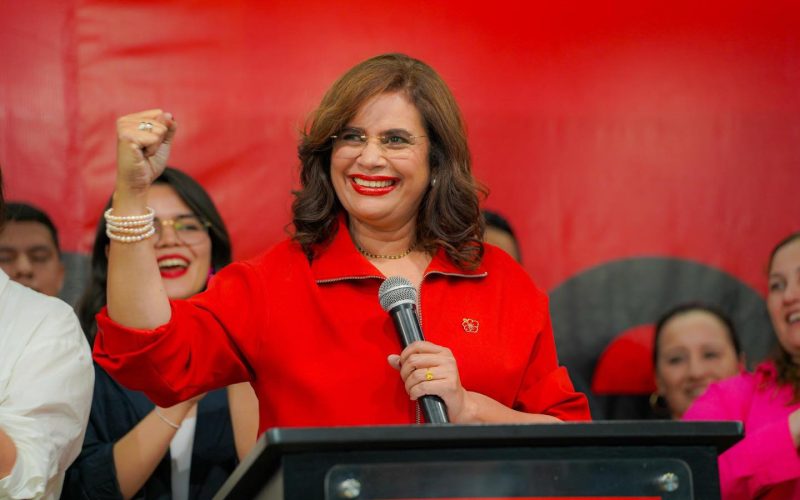
LIBRE presidential candidate Rixi Moncada is seeing a notable decrease in voter support with less than 90 days remaining until the general elections on November 30. Having been ahead in the polls recently, the drop in her backing has caused concern within her party and among opposition groups, who are anticipating a potential shift in the electoral contest.
Decline in voting intentions
The latest polls show that Rixi Moncada’s lead has narrowed significantly, putting an end to the initial perception that her candidacy was virtually untouchable. Analysts note that this decline coincides with questions about her economic proposals and concerns about the country’s political and financial stability. The campaign has seen an increase in the intensity of attacks from opposition sectors, contributing to the volatility of the electoral landscape.
LIBRE has begun internal discussions on strategies to regain voter confidence. Party sources note that the impact of the drop in popularity has not yet been definitively reflected in voting projections, but they acknowledge the existence of a “red alert” regarding the possibility of electoral surprises.
Opportunities for the opposition
Although fragmented, the opposition is closely monitoring the evolution of voting intention figures. The decline in support for Rixi Moncada could open up space for the formation of strategic alliances that could change the dynamics of the race. This situation reflects a scenario of uncertainty in which the movements of the different parties could have a decisive influence on the election of the next president.
Analysts point out that the interaction between the decline in support for LIBRE and the opposition’s ability to consolidate its electoral base will be decisive in the weeks leading up to the vote. The competition is intensifying in a context in which citizen participation and the perception of institutionality are playing a central role in the final outcome.
Electoral uncertainty and institutional challenges
Rixi Moncada’s decline in popularity reflects broader tensions in Honduras’ governance and political dynamics. The population remains attentive to campaign movements and signs of economic stability, aware that the election will determine not only the next president but also the direction of public policy in the coming years.
The situation encountered by LIBRE underscores the connection between public trust, institutional robustness, and the presentation of political initiatives. With under three months remaining until the elections, the contest is still undecided, and the strategic choices made by the parties will dictate the ultimate result at the ballot box.


